Kenya safari packing list: what to bring and skip
A practical Kenya safari packing list: soft bags for bush flights, neutral layers, documents, a health kit, cash for tips, and what to leave behind.
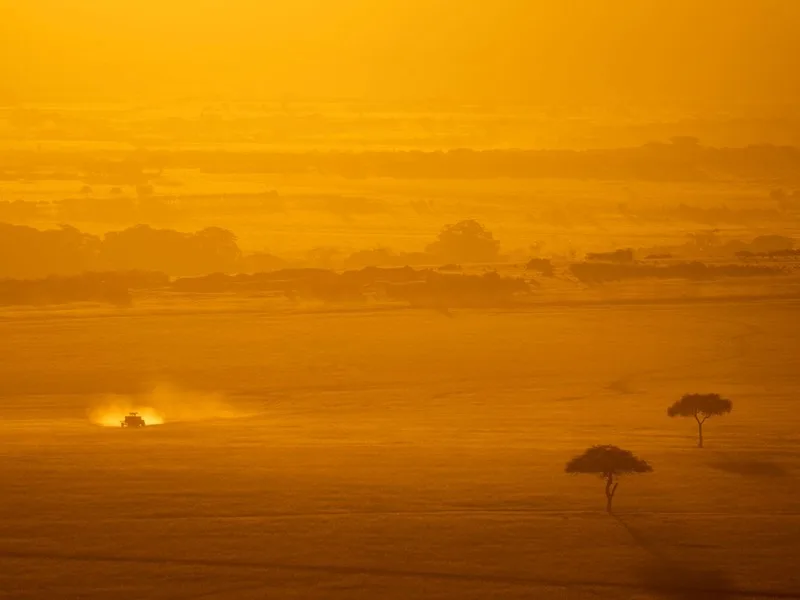
Pack less than you think, in a soft bag, and mostly in neutral colours you can layer: mornings on safari are cool, middays are hot, and if you’re flying to the Mara, the small planes usually allow about 15 kg each, including hand luggage. Add your documents, the health items your travel clinic recommends, and some small US dollar notes for tips.
I’ve planned enough trips to know that almost everyone overpacks the first time. Here’s the list we’d actually use.
First, the bag
Use a soft, squashy bag rather than a hard suitcase. Light aircraft have small holds, and road vehicles have limited space once everyone’s luggage is in.
Check your flight’s weight limit. Scheduled light-aircraft flights to the Maasai Mara commonly allow 15 kg per person, including hand luggage, in soft bags. Limits and bag sizes vary by airline and route, so check the current allowance for your flight before you pack. If you’re on a road safari, there’s more room, but a soft bag still makes life easier.
Coming from the beach or a longer trip? Many Nairobi hotels will store a suitcase while you’re on safari. Check with yours before you arrive.
Clothes
Safari dress is about comfort, dust and the sun, not style.
- Neutral colours. Khaki, olive, beige and grey. The CDC says tsetse flies, found in some parks, are attracted to bright and dark colours, especially blue and black. Dark navy jeans are best left at home.
- Layers. A T-shirt, a long-sleeved shirt and a fleece or light jumper cover most days. Early game drives in an open-roof vehicle can be chilly.
- Long sleeves and trousers for evenings. Mosquitoes come out at dusk, and medium-weight fabric also helps against tsetse bites.
- A light waterproof. Essential in the rains (the short rains around November, the long rains around April and May) and worth packing in any month.
- A wide-brimmed hat and sunglasses.
- Comfortable closed shoes for walks, plus sandals for camp.
- Swimwear if your lodge has a pool or you’re adding the coast.
- Something modest for towns and villages. Covering knees and shoulders is polite outside the lodges.
How many of each? For a week, three or four tops, two pairs of trousers, one pair of shorts and a fleece is plenty. Many lodges offer laundry; ask us which ones on your route do.
Documents and money
- Passport, valid for at least six months from arrival with two blank pages.
- Kenya eTA approval and your Kenyan travel health insurance confirmation (see our eTA guide).
- Your own travel insurance details, including the emergency number.
- Yellow fever certificate if your clinic gave you one, and especially if you’re crossing into Tanzania, which asks for it from travellers arriving from Kenya.
- Copies of all of the above on your phone and on paper, kept separately.
- Cards and some cash. Many camps and lodges take cards. Bring around $200–300 in small US dollar notes for tips and incidentals; clean, newer notes are easiest to use.
Health and comfort kit
Speak to a travel clinic or your doctor about what you personally need. Our malaria and vaccinations guide summarises what the CDC and NHS currently recommend. For the bag:
- Antimalarial tablets, if prescribed, with enough to finish the course after you get home.
- Insect repellent for exposed skin.
- Any regular medicines in their original packaging, with a copy of the prescription.
- High-factor sunscreen and lip balm. The sun is strong near the equator.
- A small first-aid kit: plasters, painkillers, rehydration sachets and whatever your clinic suggests.
- Hand sanitiser and tissues or wet wipes for the vehicle.
- Motion-sickness tablets if you’re prone to it. Light aircraft and bumpy park roads can both catch people out.
Drinking water is covered: bottled water is free at all our partner camps.
Camera, binoculars and gadgets
- Binoculars. If you buy one thing for a safari, make it a decent pair, one per person if you can. Sharing a pair during a leopard sighting is hard on friendships.
- Camera with a zoom lens if you have one, plus spare batteries and memory cards. Phones take good photos of landscapes, less so of a lion 100 metres away.
- A dust-proof bag or a large zip pouch for your camera. Not a plastic carrier bag (see below).
- Power bank and charging cables. Most lodges have charging points in the room or main area; some tented camps run on solar and limit charging times.
- Plug adaptors. Kenya uses the three-pin Type G plug, the same as the UK, at 240 volts.
- A head torch for walking to your tent at night.
Wi-Fi at most camps is in the main area, not the tents. Many travellers pick up a Kenyan SIM for data.
What to leave at home
- Plastic bags. Kenya banned single-use plastic carrier bags in 2017. According to NEMA, Kenya’s environment authority, travellers must dispose of plastic bags used to pack personal items, and duty-free bags, at the point of entry. Use packing cubes or fabric bags.
- Drones. Drones are tightly regulated in Kenya and need approval from the Kenya Civil Aviation Authority, and parks and reserves have their own permission rules on top. Unless you’ve sorted the permits well in advance, leave it at home.
- Hard-shell suitcases if you’re on a light-aircraft flight.
- Bright white clothes. They don’t stay white for long in the dust.
- Valuable jewellery. You won’t need it, and it’s one less thing to worry about.
Packing for children
Children need the same basics, plus a favourite snack, something to do on longer drives, their own binoculars if they’re old enough, and a warm layer for early mornings. Our family safaris page and the family safari guide cover pace and ages.
A one-line version
Soft bag, 15 kg if flying, neutral layers, a fleece, a hat, binoculars, repellent, your documents, and small dollar notes. Everything else is a bonus.
Ask us for a list matched to your route and season. Message us on WhatsApp, between 7am and 10pm Nairobi time. More practical answers are on our FAQ page.
Sources
All checked 3 November 2026.
- CDC Yellow Book: African trypanosomiasis (tsetse flies and clothing colours)
- CDC Yellow Book: African safaris and climbing expeditions
- NEMA Kenya: FAQs on the plastic bags ban
- UK FCDO: Kenya entry requirements (passport, insurance, yellow fever)
- UK FCDO: Tanzania entry requirements (yellow fever certificate)
- Kenya Civil Aviation Authority (drone approvals: check the current rules before you travel)
- Safarilink terms and conditions, as published by Travel Butlers (15 kg including hand luggage, soft bags; confirm with your airline)