Why Tsavo
Tsavo East and Tsavo West together cover about 22,000 km², more than ten times the size of the Maasai Mara and Amboseli combined, and one of the largest protected wildlife areas in the world. The two parks are split by the Nairobi–Mombasa road and railway. Very few vehicles share that space, so you can drive for an hour and see nobody else.
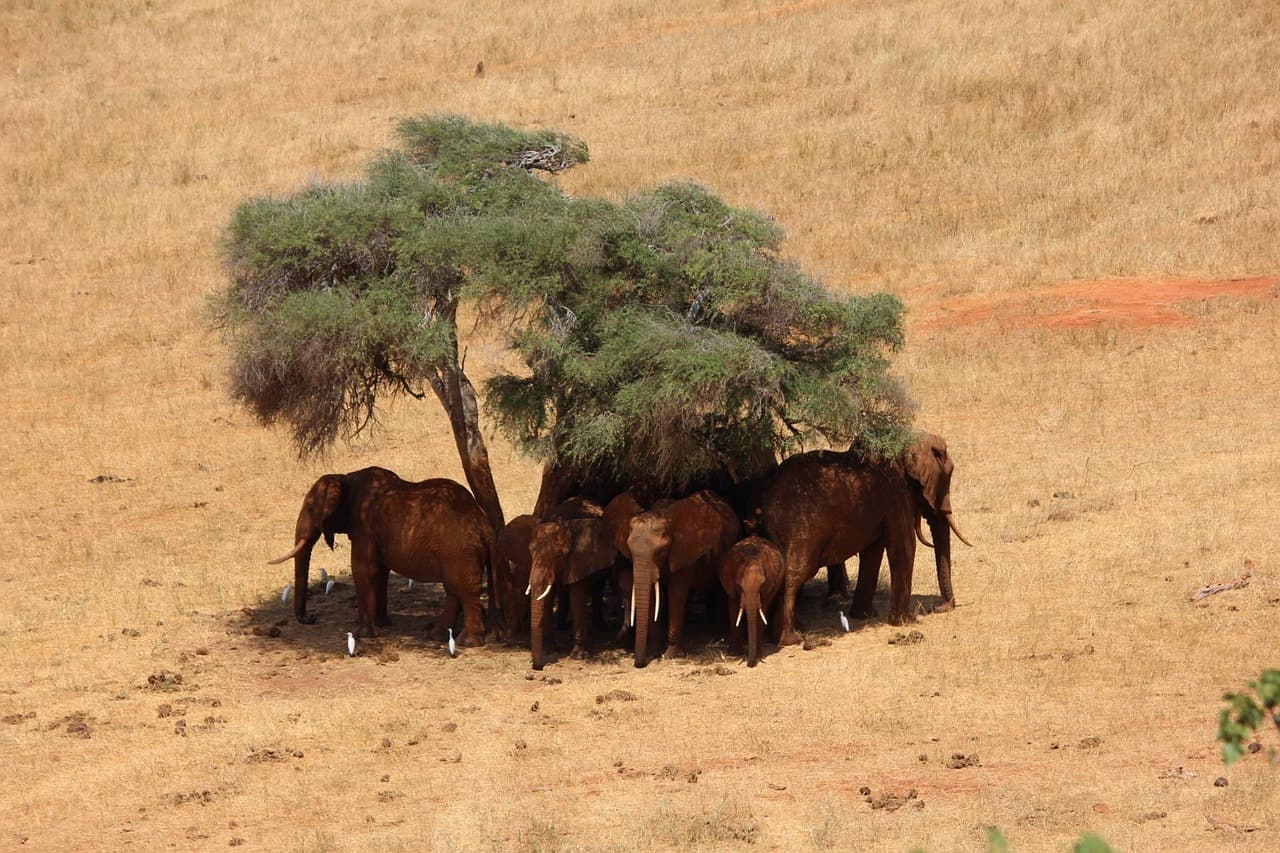
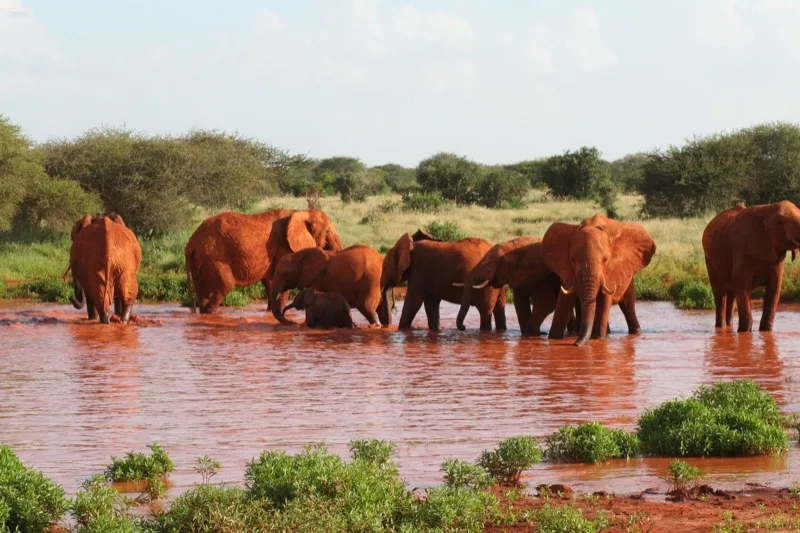
The trade-off is density. Game is spread out and the bush can be thick, so Tsavo rewards patience and a guide who knows the water points. What you get in return is a safari that feels wild: red elephants at a waterhole, a lion on a lava ridge, and no queue of minibuses behind you.
East or West?
- Tsavo East is flat, open and red. It’s easier for spotting big herds, especially around Aruba Dam and along the Galana River. It is also the closer of the two to the coast.
- Tsavo West is volcanic and greener, with hills, lava flows and Mzima Springs. You’ll see fewer animals per hour but far more scenery, plus the Ngulia rhino sanctuary.
With two or three nights, do one park properly. With four or more, cross between them.
The beach-and-safari shortcut
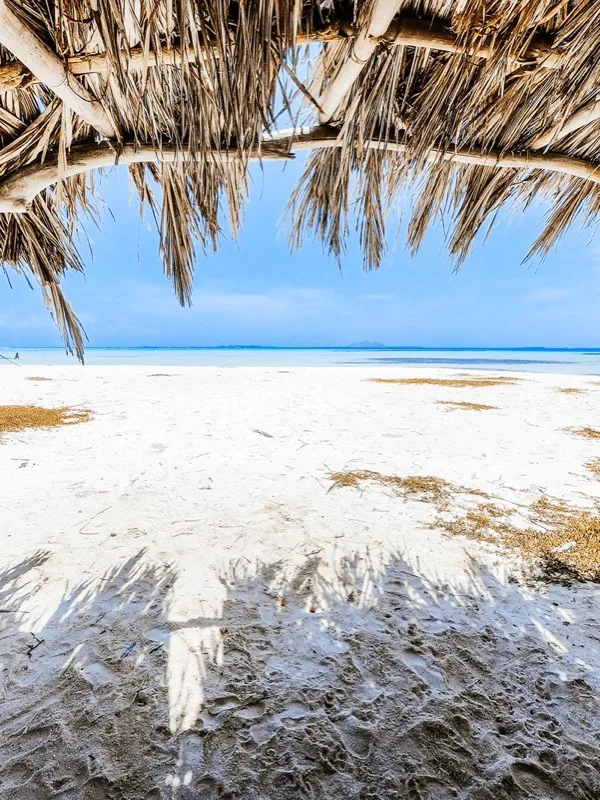
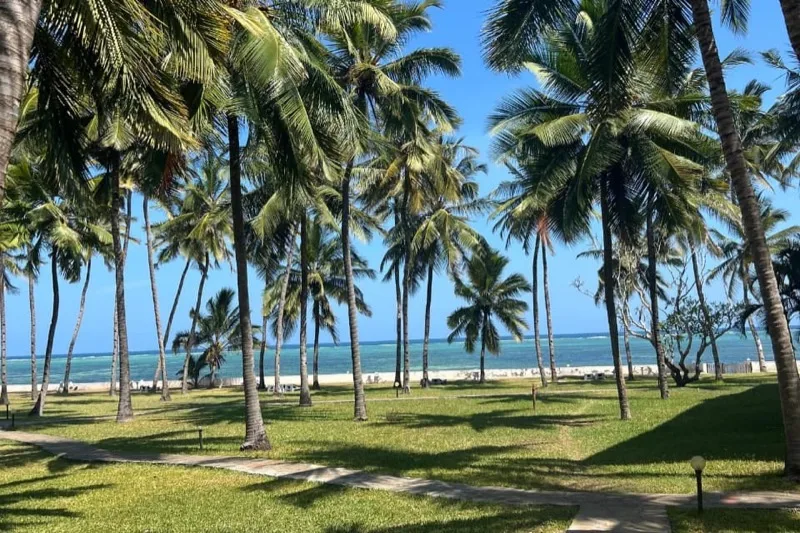
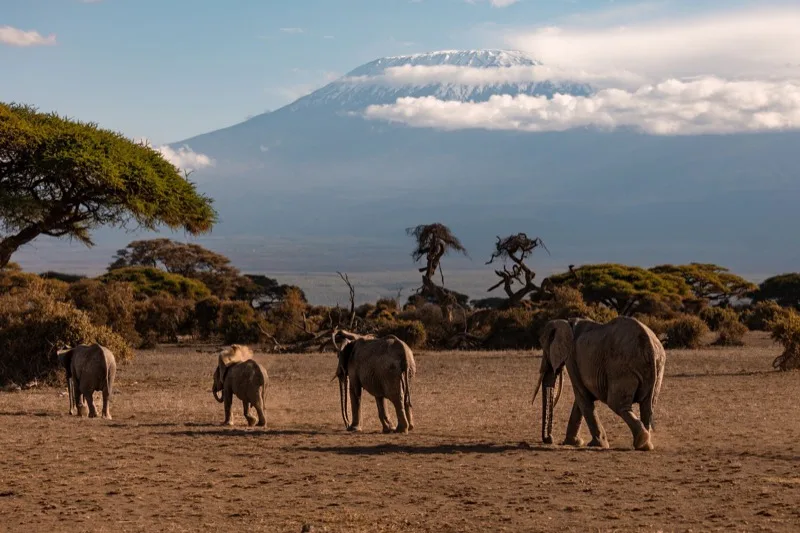
Tsavo is the best safari to pair with the coast. Tsavo East’s Buchuma gate is about 100 km from Mombasa, roughly 2 hours by road, and 3–4 hours from Diani. You can leave the beach after breakfast and be on a game drive by lunch. Most of our Diani and Mombasa combos use it for exactly that reason, and Amboseli is next door if you want Kilimanjaro views too.
Getting there
- From Nairobi by train: the 08:00 Madaraka Express (SGR) Inter-County train stops at Mtito Andei (about 3 hours) and Voi (about 4 hours), right next to the parks. Your driver-guide meets you at the station.
- From Nairobi by road: about 4–5 hours (232 km) to Tsavo West’s Mtito Andei gate.
- From the coast: about 2 hours from Mombasa, 3–4 from Diani.
Park fees
Since 1 October 2025, Tsavo East and Tsavo West charge non-residents US$80 per adult and US$40 per child per day (Kenya Wildlife Service). Fees are paid online through eCitizen, and our trip prices include them.
The man-eaters of Tsavo
In 1898 two maneless lions killed railway workers building the Tsavo River bridge. The story became the film The Ghost and the Darkness, and the lions are now in Chicago’s Field Museum. Many Tsavo males are still maneless or short-maned today, and guides will point out the bridge site.
Best time to visit Tsavo
- June – October Peak
Long dry season. Vegetation thins, animals gather at Aruba Dam, the Galana River and Mzima Springs. Easiest viewing of the year.
- November – December Shoulder
Short rains turn the park green in days. Fewer vehicles, lower rates, some afternoon storms.
- January – February Good
Short dry spell between the rains. Hot, clear, quieter than June–October, and a good fit with peak beach season on the coast.
- March – May Avoid
Long rains. Thick bush hides game and some tracks become impassable.
What you'll see in Tsavo
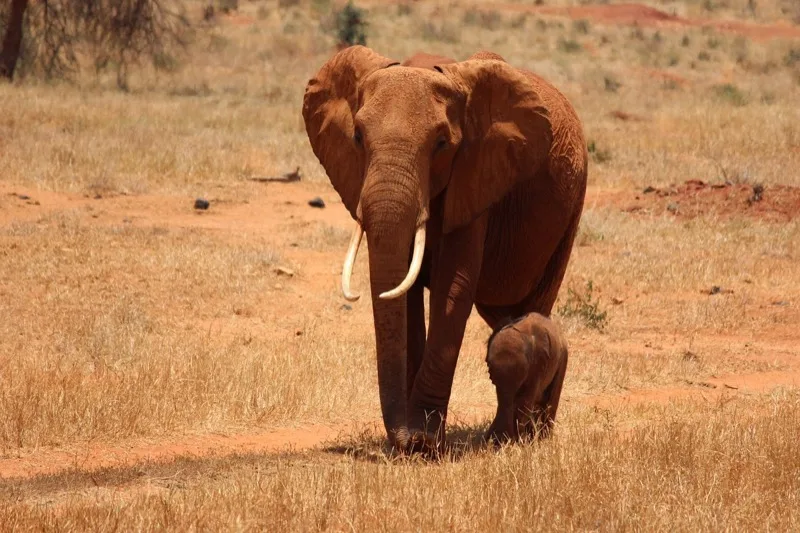
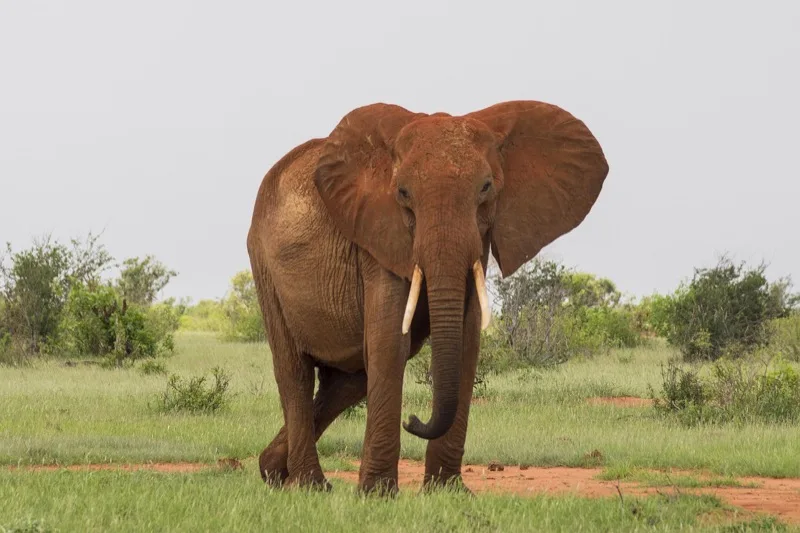
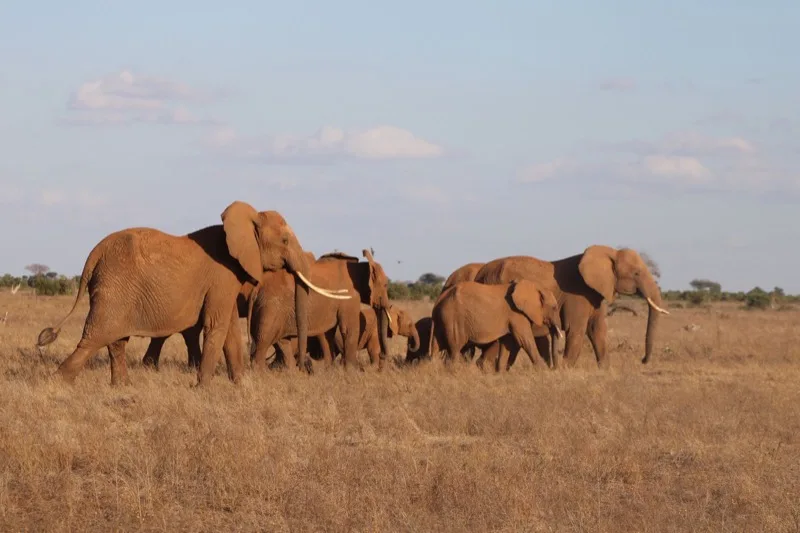
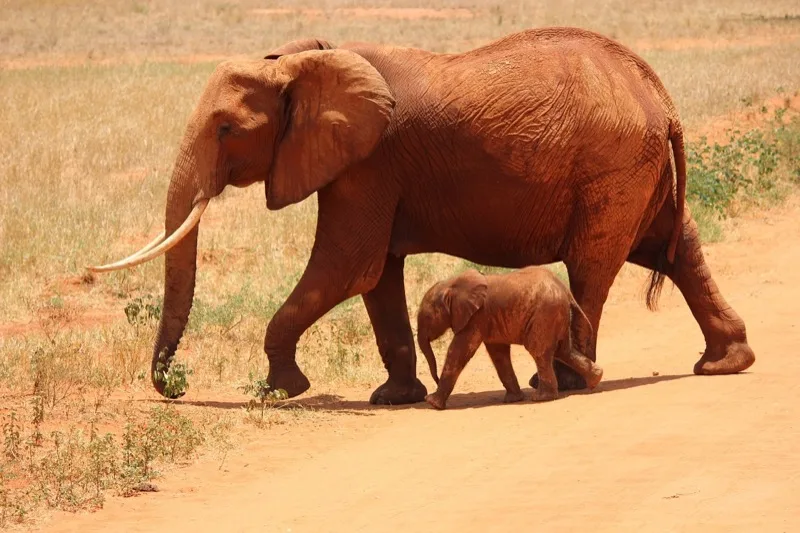
- Elephants dusted red by Tsavo's iron-rich soil
- Lion, including the maneless males Tsavo is known for
- Hippo and crocodile at Mzima Springs, seen from an underwater hide
- Black rhino at the fenced Ngulia Rhino Sanctuary (Tsavo West)
- Fringe-eared oryx, lesser kudu and gerenuk, rare further west
- Shetani lava flow, Lugard Falls and the Yatta Plateau
Where to stay in Tsavo
- Finch Hattons Top-tier
Tented luxury around a hippo-filled spring in Tsavo West. The splurge option.
- Kilaguni Serena Safari Lodge Mid-tier
Inside Tsavo West, with a floodlit waterhole you can watch from the bar after dark.
- Satao Camp Mid-tier
Classic tented camp in Tsavo East on a busy waterhole. Elephants walk past the tents.
- Voi Safari Lodge Entry
Hilltop lodge near the Voi gate with a long view over the plains. Good value and easy to reach by train.
Tsavo: common questions
When is the best time to visit Tsavo?
Jun – Oct. June – October: Long dry season. Vegetation thins, animals gather at Aruba Dam, the Galana River and Mzima Springs. Easiest viewing of the year.
How much does a Tsavo safari cost?
Our Tsavo packages start from $893 per person, two sharing. That's the entry-tier price in the lowest season. Each package page lists exactly what's included (accommodation, transport, guiding and park fees) and the vehicle for every tier. You can book online or plan the trip with us on WhatsApp.
How many days do you need in Tsavo?
Our Tsavo trips start at 3 days. We recommend at least 3 days, so you get several game drives at dawn and dusk, when animals are most active.
What wildlife will I see in Tsavo?
Elephants dusted red by Tsavo's iron-rich soil; Lion, including the maneless males Tsavo is known for; Hippo and crocodile at Mzima Springs, seen from an underwater hide; Black rhino at the fenced Ngulia Rhino Sanctuary (Tsavo West); Fringe-eared oryx, lesser kudu and gerenuk, rare further west.